Seeding Biosocioeconomy
Portuguese
•
10m
What if our way of life could connect with a thriving nature, rather than destroying its richness and diversity? This is what socio-bioeconomy proposes and is turning into a reality on the ground. This model connects the traditional knowledge of communities about the best ways to use, restore, and protect resources, with the creation of employment and exploration of products that come from nature but do not exploit it. If socio-bioeconomy was more broadly implemented in Brazil, for example, it could actually restore more than 24 million hectares of forest and boost the Amazon’s GDP by 40 billion reais annually.
But what does socio-bioeconomy look like on the ground? This is what we explored in the film by Nature4Climate and If Not Us Then Who, in collaboration with the Articulation of Indigenous Peoples of Brazil, filmed in Oiapoque, Brasília, and São Paulo, showcasing the efforts of Indigenous and local communities like Uasei Açaí driving this change and the impact of the socio-bioeconomy as a scalable solution worldwide.
Director(s): Jaye Renold
2024 | 11 minutes
Brazil/US/UK
Language(s): Portuguese
Subtitles: English
Up Next in Portuguese
-
Free Motherhood - The impact of incar...
In a Brazilian prison, the lives of five incarcerated mothers intertwine as they navigate the heart-wrenching reality of being separated from their babies. Currently, 63% of women in prison in the country are black and only 34% of them have completed primary school. The vast majority, 64%, are co...
-
This Film is About
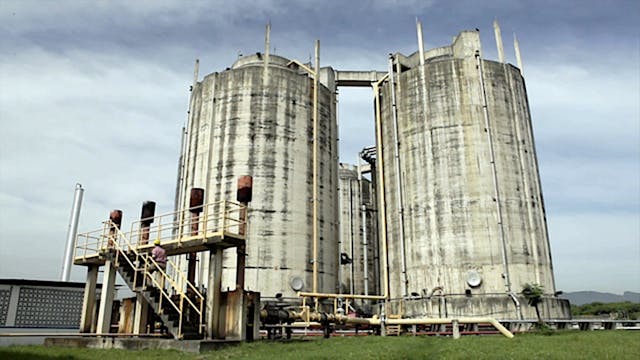
In Rio de Janeiro an engineer fights for a sustainable future with spirited ideas and an unconventional source of energy - made from sewage.
Director: Eduardo Hunter Moura
2012 | 4 min
Brazil
Language: Portuguese
Subtitles: EnglishFILMMAKER Q&A:
https://simaacademy.com/filmmaker-qa/this-film... -
The Conscious Hood: Being Black is No...
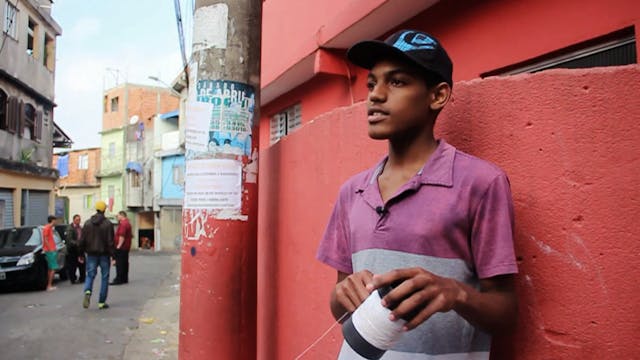
Being Black Is No Crime is the fourth episode of the web-series "The Conscious Hood" documenting social issues crucial to the residents of São Paulo's Heliópolis, the second largest urban slum in Latin America. Directed by videomaker Katherine Jinyi Li and filmed during her youth journalism works...