Seeding Biosocioeconomy
Food and Agriculture
•
10m
What if our way of life could connect with a thriving nature, rather than destroying its richness and diversity? This is what socio-bioeconomy proposes and is turning into a reality on the ground. This model connects the traditional knowledge of communities about the best ways to use, restore, and protect resources, with the creation of employment and exploration of products that come from nature but do not exploit it. If socio-bioeconomy was more broadly implemented in Brazil, for example, it could actually restore more than 24 million hectares of forest and boost the Amazon’s GDP by 40 billion reais annually.
But what does socio-bioeconomy look like on the ground? This is what we explored in the film by Nature4Climate and If Not Us Then Who, in collaboration with the Articulation of Indigenous Peoples of Brazil, filmed in Oiapoque, Brasília, and São Paulo, showcasing the efforts of Indigenous and local communities like Uasei Açaí driving this change and the impact of the socio-bioeconomy as a scalable solution worldwide.
Director(s): Jaye Renold
2024 | 11 minutes
Brazil/US/UK
Language(s): Portuguese
Subtitles: English
Up Next in Food and Agriculture
-
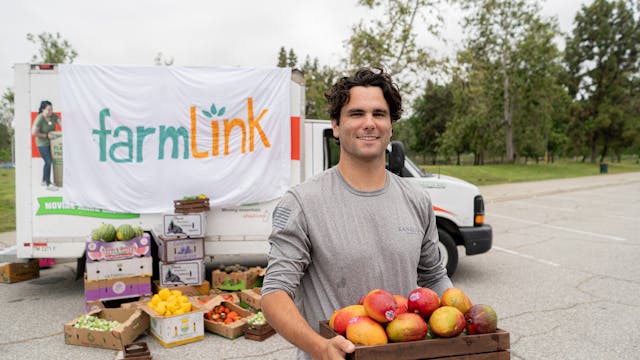
Abundance: The Farmlink Story
During the largest food crisis in a century, a group of college students step up to help those facing hunger. Their small local effort inspires hope nationally and motivates 600+ students to drop everything to feed millions of families.
Within months, the project scales larger than anyone could ...
-
Farmer's Footprint
This film features the trials, learnings and victories of the four generation Breitkreutz family from Stoney Creek Farm transitioning from conventional farming to regenerative agriculture in Redwood Falls, Minnesota. Using conventional methods they saw their soils degrade and their input costs ri...
-
Homecoming
“If not us, who will protect our territories? Who will manage our territories?”
Indonesian Indigenous Youth called their fellow brothers living in the cities and finished their studies back to the community. They called it the ‘Homecoming movement.
Youth are driving new models of sustainable ru...